Outcome-Based Education (OBE) at KLELCB
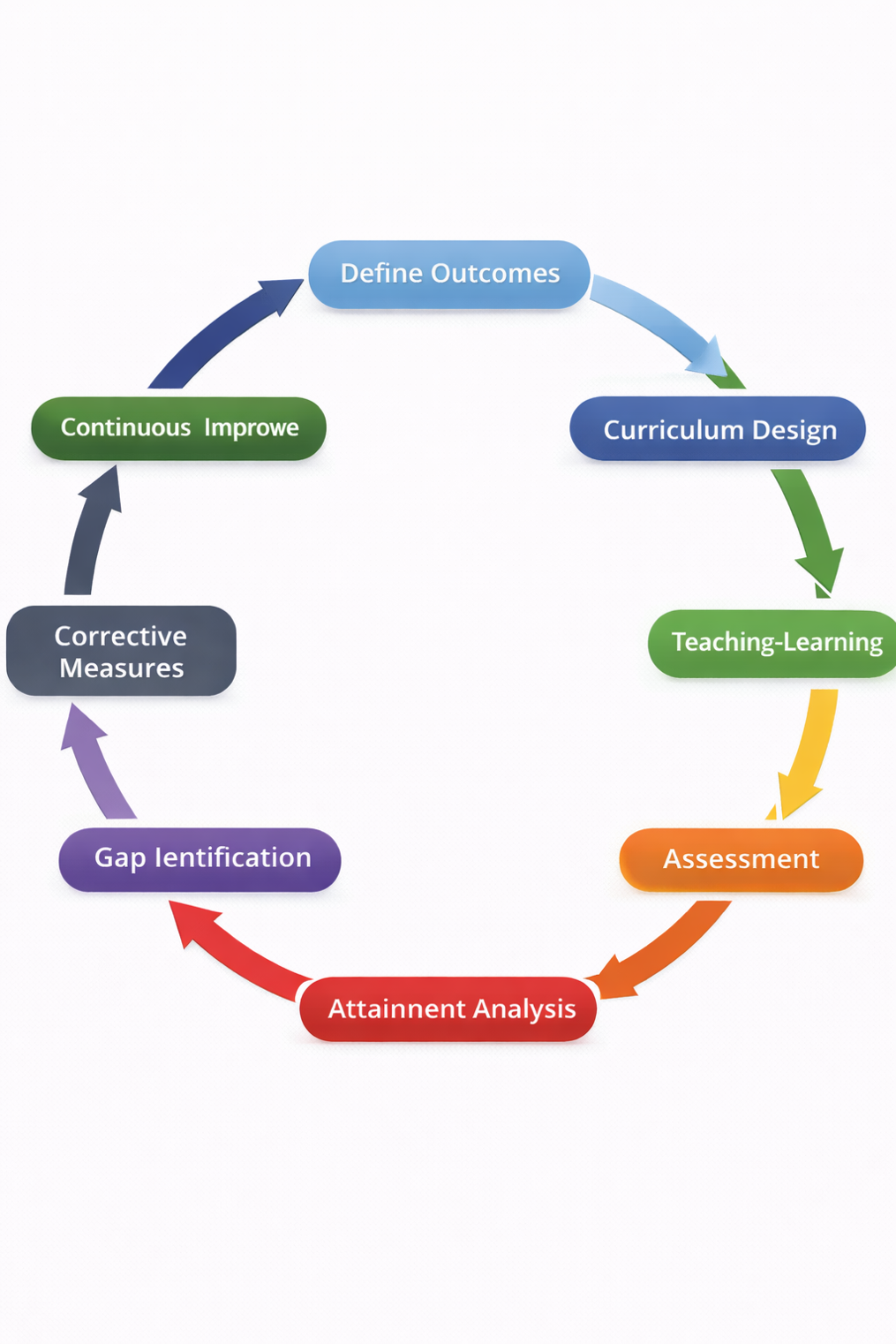
KLE Law College, Bengaluru adopts Outcome-Based Education (OBE) as a learner-centric framework that focuses on the achievement of clearly defined learning outcomes. The institution ensures that every academic activity, from curriculum design to assessment, contributes towards the attainment of professional knowledge, legal skills, ethical values, and lifelong learning competencies. OBE compliance is achieved through systematic formulation of outcomes, continuous assessment of attainment levels, and periodic review of academic processes. This approach ensures alignment between educational objectives, student learning, and the expectations of the legal profession.
Programme Outcomes and Programme Specific Outcomes
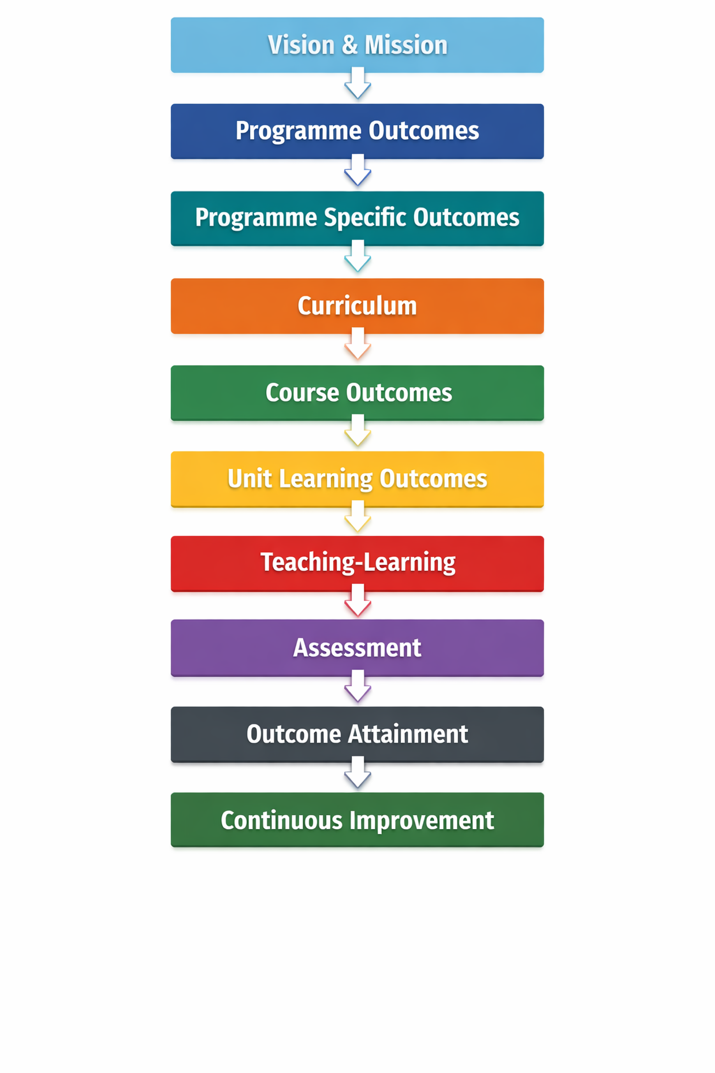
The College has formulated Programme Outcomes (POs) that define the knowledge, skills, values, and professional attributes expected from law graduates. In addition, Programme Specific Outcomes (PSOs) have been developed for B.A. LL.B. (Honours), B.B.A. LL.B. (Honours), B.Com. LL.B. (Honours), LL.B. (Honours), LL.M., and Ph.D. programmes to address their distinct academic and professional orientations. These outcomes are designed through stakeholder consultation and aligned with contemporary legal education requirements. The POs and PSOs serve as the foundation for curriculum design, teaching-learning processes, and assessment practices across all programmes.
Curriculum Design and Course Outcomes
The curriculum at KLE Law College is designed in accordance with Outcome-Based Education principles to ensure meaningful and measurable student learning. Every course within the programme structure is supported by clearly articulated Course Outcomes (COs) that define the knowledge, skills, and competencies students are expected to acquire. The Course Outcomes are systematically mapped with Programme Outcomes and Programme Specific Outcomes to establish a clear pathway for outcome attainment. This structured approach ensures coherence between curriculum objectives, instructional delivery, and graduate attributes.
Course Plan and Unit Learning Outcomes
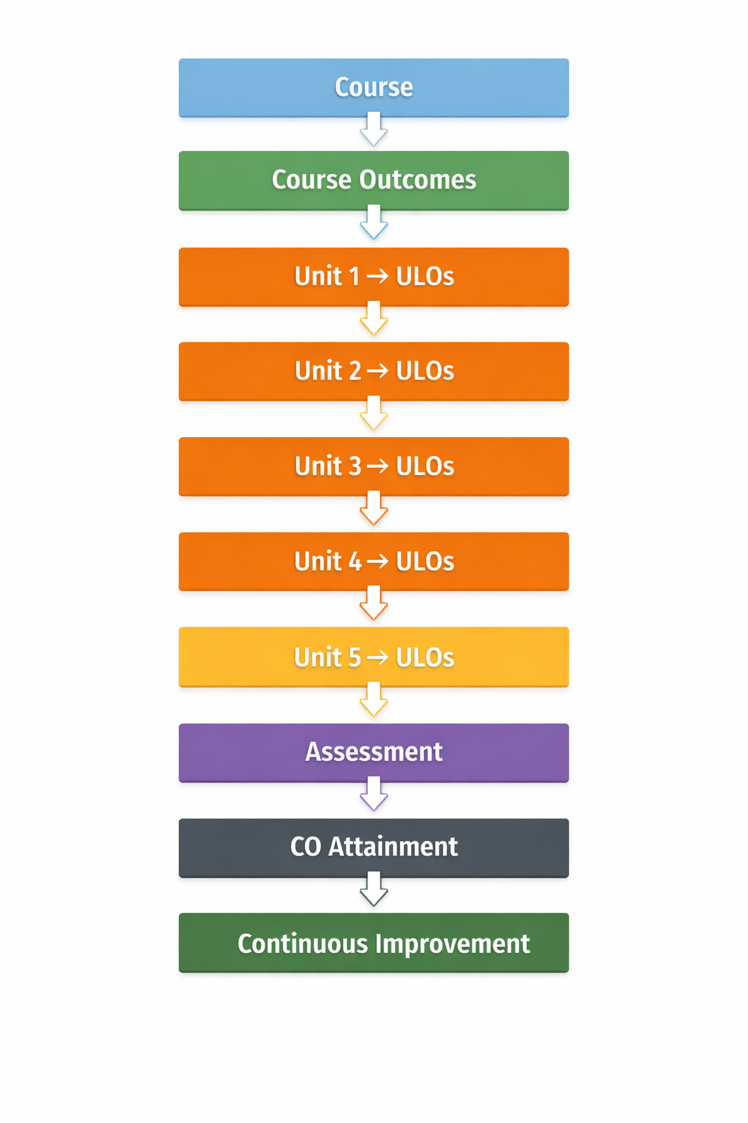
Each course offered by the College is supported by a detailed Course Plan prepared before the commencement of the semester. The Course Plan includes course objectives, Course Outcomes, unit-wise syllabus distribution, teaching methodologies, assessment strategies, and Unit Learning Outcomes (ULOs). Unit Learning Outcomes specify the expected learning achievements at the completion of each instructional unit and contribute directly to the attainment of Course Outcomes. This framework promotes effective academic planning, consistent delivery, and enhanced monitoring of student progress.
OBE through In-Semester Assessment
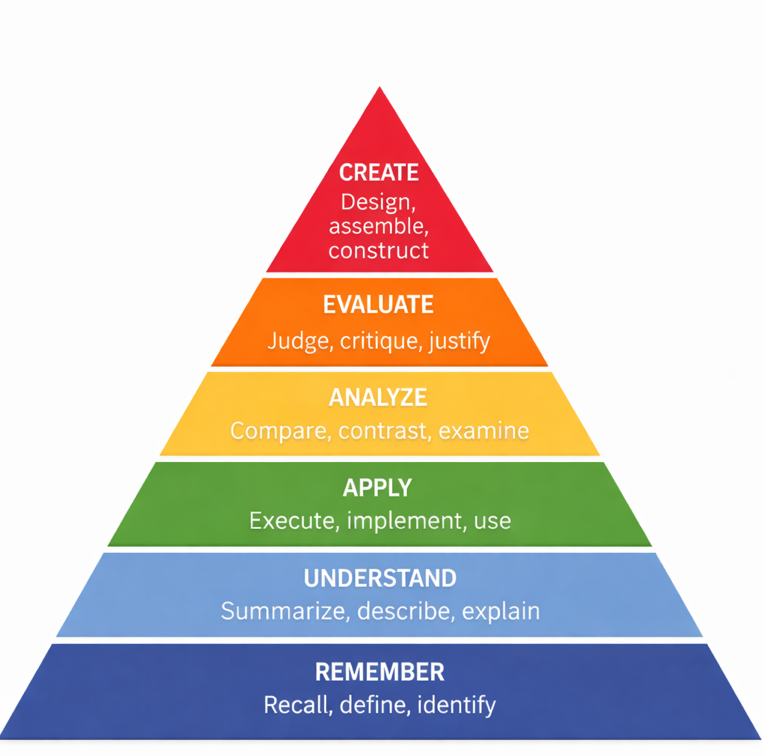
The implementation of OBE is strengthened through a structured In-Semester Assessment system that evaluates student learning on a continuous basis. Assessment components such as assignments, presentations, quizzes, case analyses, projects, moot court exercises, and internal examinations are mapped to Bloom’s Taxonomy levels, Course Outcomes, and Programme Outcomes. This mapping enables the assessment of both foundational knowledge and higher-order cognitive skills including analysis, evaluation, and application. The attainment data generated through these assessments is utilized for measuring learning outcomes and facilitating continuous academic improvement.
OBE through End-Semester Assessment
The End-Semester Assessment process is designed to comprehensively evaluate the achievement of Course Outcomes and Programme Outcomes. Every question in the end-semester examination is mapped to the appropriate Bloom’s Taxonomy level, Course Outcome, and Programme Outcome to ensure outcome-based assessment. The question paper blueprint provides balanced coverage of learning outcomes and cognitive domains, promoting analytical and application-oriented learning. The results obtained from these assessments contribute significantly to outcome attainment analysis and the continuous enhancement of academic quality.
Bloom’s Taxonomy
OBE Attainment Cycle